
How Often to Clean Air Ducts: Naples FL Frequency Guide
How Often Should You Clean Air Ducts? A Naples, FL Frequency Guide
For a typical Southwest Florida home, you should clean air ducts every 3 to 5 years, and you should clean them sooner when a specific trigger shows up. That is the honest answer to how often should you clean air ducts. The wrong answer costs you money in two directions: cleaning too often wastes cash, and waiting too long lets dust, allergens, and humidity-driven growth build up inside a system you breathe through every day.
In our experience servicing Naples and Fort Myers homes, frequency is driven by what is happening in your house, not by a date on the calendar.
This guide gives you the baseline interval, the climate reasons SW Florida runs shorter than drier states, the seven factors that move your personal date, and the observable signs that say "clean now." We cover air ducts and dryer vents separately, because they are two different systems on two different schedules. By the end, you will have a clear, defensible schedule for your own home instead of a guess.
The Short Answer: How Often to Clean Air Ducts in SW Florida
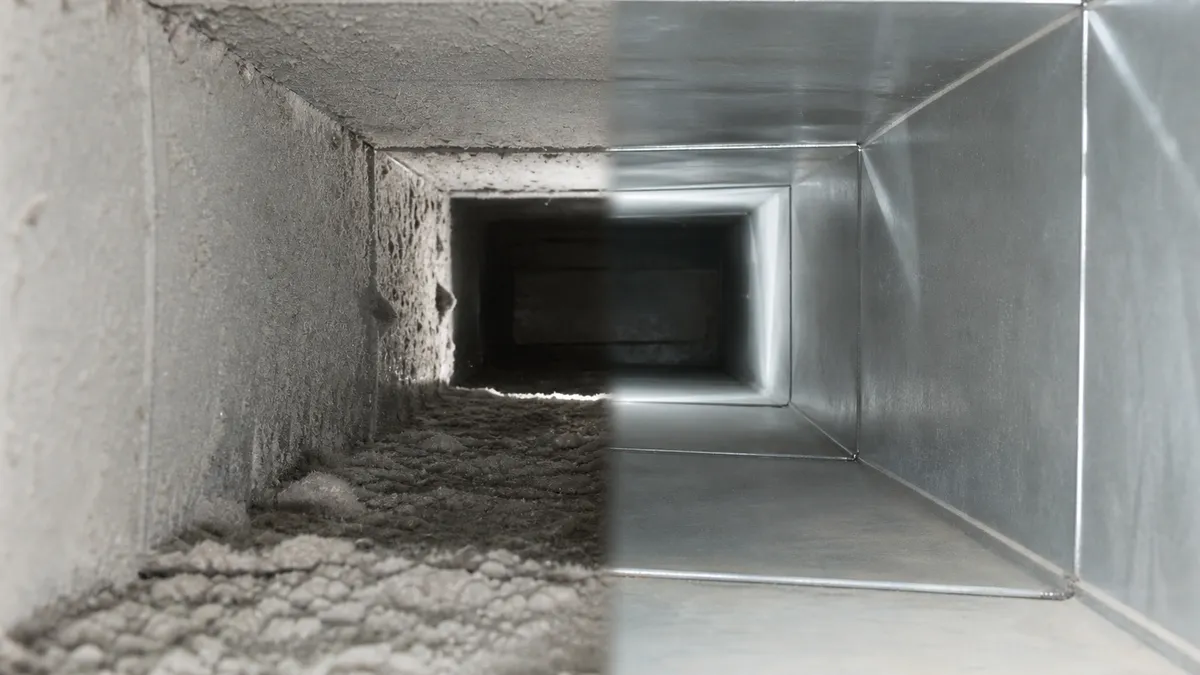
Most homes in Naples, Fort Myers, and Cape Coral do well with a whole-system air duct cleaning every 3 to 5 years. Households with no pets, strong filtration, and no recent construction can lean toward the 5-year end. Households with pets, allergies, recent renovations, or post-storm attic intrusion should lean toward 3 years or sooner.
The U.S. Environmental Protection Agency's position, laid out in its guide on whether you should have your air ducts cleaned, is that ducts should be cleaned when there is a demonstrated reason rather than on a fixed schedule. The National Air Duct Cleaners Association publishes a general guidance range that lands in this same multi-year window.
Here is the baseline interval table we use as a starting point with SW Florida homeowners:
| Household Profile | Suggested Air Duct Cleaning Interval | Why |
|---|---|---|
| No pets, good filtration, no recent work | Every 5 years | Low contaminant load, slow buildup |
| Average household, one pet | Every 3 to 4 years | Moderate dander and dust load |
| Multiple pets or shedding breeds | Every 2 to 3 years | Faster hair and dander accumulation |
| Allergy or asthma sufferers in the home | Every 2 to 3 years | Lower tolerance for airborne irritants |
| Post-renovation or post-hurricane | Once, right after the event | One-time contaminant spike overrides the calendar |
Treat this table as the floor, not a promise. The right answer to how often air ducts should be cleaned in your specific home depends on the factors below. Think of the 3-to-5-year range as the default, then adjust up or down based on what your house is actually doing.
Why Florida Humidity Changes How Often Air Ducts Should Be Cleaned
Southwest Florida is not Phoenix or Denver, and your duct schedule should not copy theirs. Naples runs a long cooling season, high outdoor humidity, and warm temperatures nearly year-round. Your air conditioning system pulls moisture out of the air constantly, which means the coil, drain pan, and nearby duct surfaces stay damp far more of the year than they would in a dry climate. Damp, dark, dust-coated surfaces are exactly where microbial growth gets started.
That humidity factor is the single biggest reason how often you should clean air ducts in Florida differs from national rules of thumb. A home in a dry climate might genuinely stretch a cleaning interval out toward the far end of the range with no consequence. A coastal SW Florida home with the AC running ten months a year accumulates the conditions for musty odors and surface growth faster.
We have walked into plenty of Cape Coral and Bonita Springs homes where the homeowner followed an "every 7 years" guideline they read online and ended up with a musty smell from the vents long before that date arrived.
Three climate realities push SW Florida toward the shorter end of the interval:
- Long cooling season. The system runs more hours per year, moving more air and pulling in more dust through every cycle.
- Persistent humidity. Moisture on coil and duct surfaces, combined with organic dust, is the recipe for growth and odor.
- Salt and storm exposure. Coastal air and tropical storms introduce extra particulate and the risk of attic intrusion that a dry inland home never faces.
None of this means you need annual duct cleaning. It means the honest SW Florida default sits at 3 to 5 years rather than the longer intervals you will see quoted for drier parts of the country.
7 Factors That Decide How Often You Should Clean Air Ducts
The calendar is a starting point. These seven factors are what actually decide how often you should clean air ducts in your home. Each one either shortens or lengthens your interval, and most homes have two or three of them in play at once.
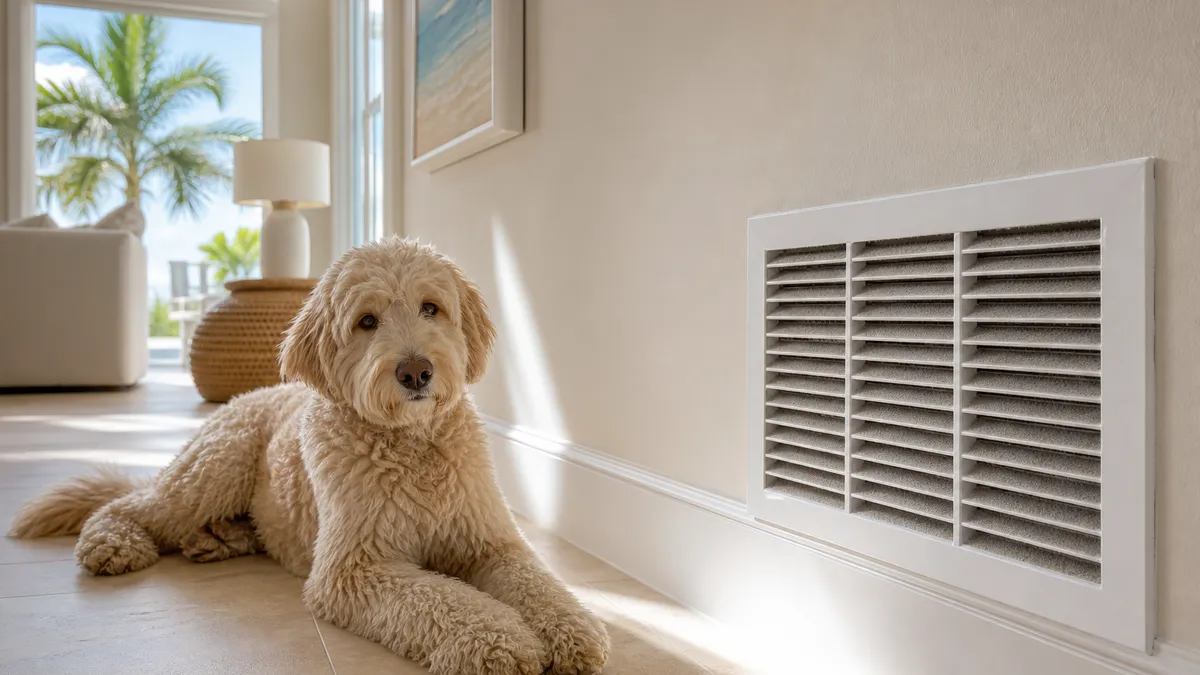
- Pets. Dander, hair, and the dust they track in shorten the interval.
- Allergies or asthma in the household. Lower tolerance for airborne irritants justifies more frequent cleaning.
- Recent renovation or construction. Drywall dust and sanding debris are a one-time spike that overrides the calendar.
- Post-storm attic intrusion. Wind-driven debris, insulation displacement, or water intrusion after a hurricane is a trigger on its own.
- Indoor smoking. Tar and particulate coat duct surfaces and accelerate buildup.
- Visible mold or a persistent musty smell. This is not a scheduling factor; it is a "clean now" factor.
- System age and filtration quality. An older system with a cheap fiberglass filter loads up far faster than a newer system running a quality pleated filter.
Here is how those factors translate into an adjusted interval:
| Factor Present | Effect on Interval | Adjusted Target |
|---|---|---|
| Multiple pets | Shorten | Every 2 to 3 years |
| Allergy or asthma household | Shorten | Every 2 to 3 years |
| Recent renovation | One-time trigger | Clean once after the work |
| Post-hurricane attic intrusion | One-time trigger | Inspect and clean after the storm |
| Indoor smoking | Shorten | Every 2 to 3 years |
| Strong filtration, no other factors | Lengthen | Toward 5 years |
When you stack factors, take the shortest interval that applies. A Naples household with two dogs and an asthma sufferer should plan on roughly a 2-to-3-year cycle, not a 5-year one.
How Pets and Allergies Shorten the Interval
Pets are the most common reason we see SW Florida homeowners move up their duct cleaning. Hair and dander get pulled into the return, ride through the blower, and settle on duct walls and the coil. The load comes back faster than in a pet-free home, which is why we suggest a 2-to-3-year cycle for multi-pet households.
Allergy and asthma sufferers benefit from the same shorter cycle for a different reason. Their tolerance for circulating dust and dander is lower, so the same buildup that a non-sensitive household would not notice can drive real symptoms. If your home has both pets and an allergy sufferer, the shorter interval wins.
Renovation, Construction, and Post-Storm Triggers
Some events override the calendar entirely. Drywall work, sanding, and flooring installation throw fine dust everywhere, and a running HVAC system pulls a surprising amount of it into the ductwork. That is a one-time cleaning trigger regardless of when you last had the ducts done.
The same logic applies after a tropical storm. Wind-driven debris, displaced attic insulation, and any water intrusion are reasons to schedule a post-hurricane duct inspection before you worry about your normal interval. These triggers reset the clock; once you clean after the event, your regular 3-to-5-year cycle starts fresh.
Dryer Vent Cleaning Frequency Is a Separate Schedule
Air ducts and dryer vents are two different systems, and confusing their schedules is one of the most common mistakes we see. Your air ducts carry conditioned air through the house. Your dryer vent carries hot, lint-laden exhaust from the dryer to the outside. They share nothing except the word "vent," and they need cleaning on very different cadences.
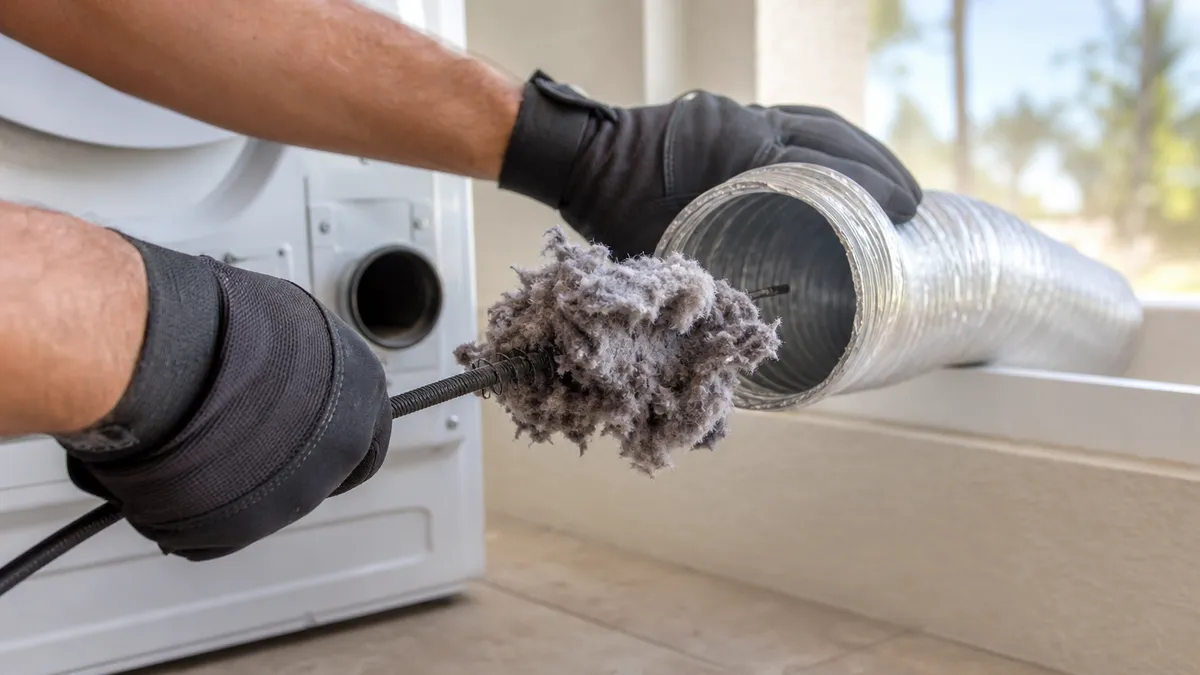
Plan on cleaning your dryer vent at least once a year. Large households that run the dryer daily, homes with long or winding vent runs, and anyone who has noticed clothes taking longer to dry should clean more often than that.
The reason is safety, not just efficiency: lint is highly flammable, and a clogged vent forces the dryer to run hotter and longer. For the full safety picture, our guide on dryer vent cleaning in Naples walks through the warning signs and the code-compliant repairs that sometimes go with it.
Use this quick comparison to keep the two schedules straight:
| System | Typical Cleaning Frequency | Primary Reason |
|---|---|---|
| Air ducts | Every 3 to 5 years | Air quality, dust, humidity-driven growth |
| Dryer vent | At least once per year | Fire safety, dryer efficiency, airflow |
| Dryer vent, heavy use | Every 6 to 9 months | Faster lint accumulation in large households |
Annual duct cleaning is almost never necessary. Annual dryer vent cleaning usually is. Keep the two on separate calendars and you will not over-spend on one or neglect the other.
Signs You Should Clean Air Ducts Sooner Than the Calendar Says
Sometimes your house tells you to move the date up. These are the observable signals that override your interval. If you notice any of them, treat it as a "schedule an inspection" prompt rather than waiting for the calendar. For a deeper diagnostic, our signs you need duct cleaning self-check walks through a four-step process.
- Visible debris at the registers. Furry buildup on the grille longer than about an eighth of an inch, or actual chunks of drywall, insulation, or insect debris, means contamination has moved past the surface.
- A persistent musty smell after coil service. If a technician has already cleaned your coil and drain and the musty odor returns, the duct surfaces themselves are likely the source. Our guide on a musty smell from AC vents covers how to isolate the cause.
- Dust returning fast after you dust. Surfaces that re-coat within a day or two of cleaning point to dust being circulated through the system.
- Allergy or respiratory symptoms that spike indoors. When symptoms get worse inside the home and better when you leave, the air handling system is worth a look.
- Evidence of vermin or insects. Droppings, nesting material, or insect debris at the registers are a clear "clean now" signal.
Any single strong sign, like visible furry buildup or a musty smell that survives a coil clean, is enough to schedule a professional air duct cleaning inspection in Naples regardless of when your ducts were last serviced. Two or more signs together make the case stronger. You do not need to wait for the 3-year mark when the house is already telling you what it needs.
What a Proper Whole-System Cleaning Includes (and What It Does Not)
The interval only means something if the cleaning itself is real. When we say clean air ducts every 3 to 5 years, we mean a whole-system, source-removal cleaning, not a quick vacuum at the registers. Knowing the difference protects you from paying for a service that does not actually move the needle on air quality.
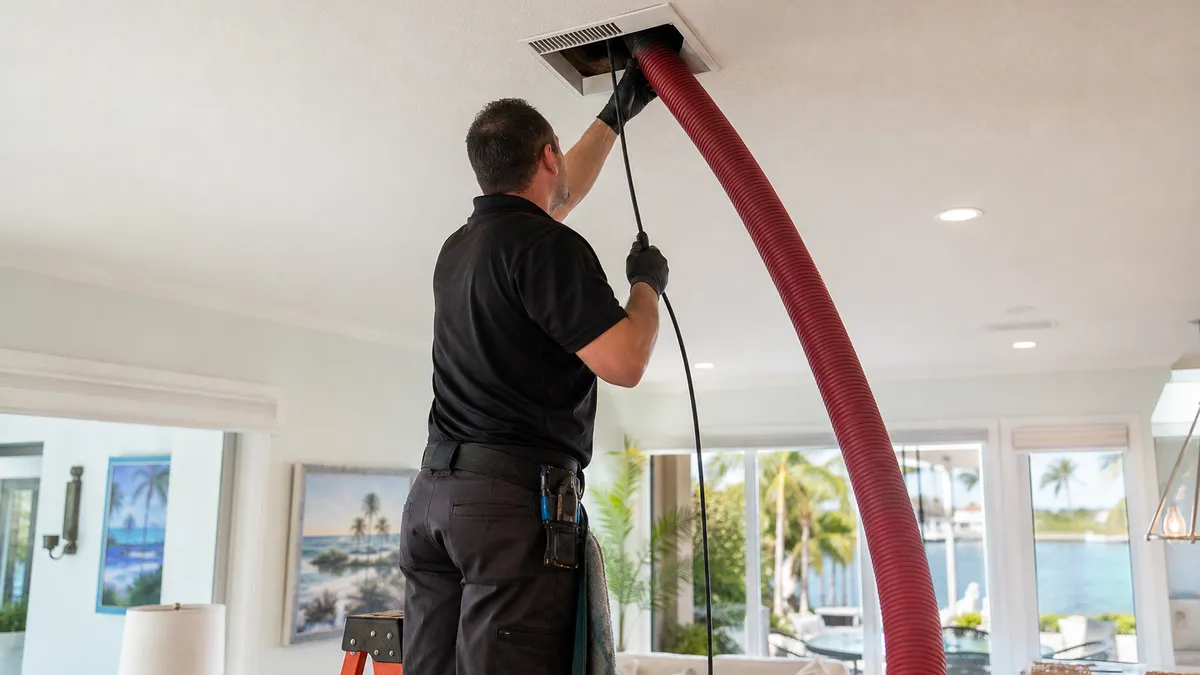
A proper whole-system cleaning addresses every surface that air touches on its way through the system:
- The supply and return ducts themselves, cleaned with mechanical agitation and negative-pressure capture so debris is pulled out, not pushed around.
- The evaporator coil, where damp dust collects and odors often start.
- The blower wheel, which loads up with a film of dust that throws the whole system out of balance.
- The plenum and drain pan, the central junctions where buildup and moisture concentrate.
What it is not is the "blow-and-go" service advertised for a rock-bottom price. A technician who runs a shop vacuum at a few registers and leaves in twenty minutes has not cleaned your system; they have cleaned the visible 5% of it. Source removal uses negative-pressure equipment and HEPA-filtered capture so the contaminants actually leave your home. When you plan your interval, plan it around a real cleaning. Two cheap surface vacuums do not equal one proper whole-system service.
How to Stretch the Time Between Air Duct Cleanings
The cheapest duct cleaning is the one you delayed responsibly. A handful of maintenance habits genuinely extend your interval, and they cost far less than the cleaning itself. These are the homeowner actions we recommend to every SW Florida client who wants to push their schedule toward the 5-year end of the range.
- Run a quality filter and change it on time. A pleated filter in the MERV 8 to 11 range captures far more than a cheap fiberglass panel. Check it monthly during cooling season and replace it before it loads up. Filter discipline alone is the single biggest lever you control.
- Control indoor humidity. Keeping the home in a sensible humidity range reduces the damp-surface conditions that drive odor and growth. A working AC does most of this, but addressing humidity actively pays off in a coastal climate.
- Keep returns sealed and unobstructed. Gaps around return grilles pull in dust from wall cavities and attic spaces. Sealing them keeps that debris out of the system.
- Address coil and drain issues promptly. A dirty coil or a slow drain creates the damp, dust-coated environment that shortens your interval. Catching these early keeps the rest of the system cleaner longer.
| Habit | Effort | Effect on Interval |
|---|---|---|
| MERV 8 to 11 filter, changed on schedule | Low | Largest single extender |
| Active humidity control | Medium | Reduces odor and growth risk |
| Sealing return grilles | Low to medium | Keeps cavity dust out |
| Prompt coil and drain attention | Medium | Prevents damp buildup |
Do these consistently and a home that might otherwise need cleaning every 3 years can often stretch comfortably toward 4 or 5. The goal is not to avoid cleaning forever; it is to make sure that when you do clean, it is because the system genuinely needs it.
Frequently Asked Questions About Air Duct Cleaning Frequency
How often should you clean air ducts in a Florida home?
For a typical SW Florida home, plan on a whole-system air duct cleaning every 3 to 5 years, leaning toward the shorter end if you have pets, allergies, or a recent renovation. Florida's long cooling season and high humidity mean ducts accumulate the conditions for dust and odor faster than they would in a dry climate. The interval is a default, not a rule; observable signs like a persistent musty smell or visible debris override the calendar. Use the 3-to-5-year range as your starting point, then adjust based on the factors in your specific home.
How often should air ducts be cleaned if you have pets?
Pet households generally benefit from cleaning every 2 to 3 years rather than the standard 3-to-5-year range. Dander and hair get pulled into the return and settle on duct surfaces and the coil, so the contaminant load returns faster than in a pet-free home. Multiple pets or heavy-shedding breeds push you toward the shorter end of that window. Strong filtration and regular filter changes help, but they do not fully offset the faster buildup. If you also have an allergy sufferer in the home, treat the 2-year interval as your target.
How often do air ducts need to be cleaned versus just changing the filter?
These are two different maintenance tasks, not substitutes for each other. Changing your filter is a monthly-to-quarterly habit that keeps dust from entering the system in the first place. Whole-system duct cleaning is the multi-year event that removes buildup already deposited inside the ducts, coil, and blower. A good filter stretches the time between cleanings, but it never eliminates the need for one. Think of the filter as prevention and the cleaning as the periodic reset.
How often should ductwork be cleaned after a renovation?
Once, right after the construction dust has settled, regardless of where you are in your normal interval. Drywall sanding, flooring work, and demolition throw fine particulate into the air, and a running HVAC system pulls a meaningful amount of it into the ductwork. That one-time spike justifies a cleaning even if you cleaned recently. After that post-renovation cleaning, your standard 3-to-5-year cycle starts fresh from that date.
Is annual air duct cleaning necessary?
For air ducts, annual cleaning is almost never necessary and usually means you are overspending. The right cadence for ducts is multi-year, driven by triggers rather than the calendar. Annual cleaning is the correct schedule for your dryer vent, which is a separate system with a real fire-safety reason to stay clear. If a company is pushing yearly duct cleaning with no specific trigger in your home, ask what observable problem they are solving. The honest answer for most homes is a 3-to-5-year duct interval and an annual dryer vent cleaning.
How often should you get your air ducts cleaned if no one has allergies?
A home with no allergy or asthma sufferers, no pets, and strong filtration can comfortably lean toward the 5-year end of the range. Without those sensitivity factors, the air quality benefit of more frequent cleaning is smaller, and your money is better spent on good filtration and humidity control. You should still watch for the override signs: visible debris, a persistent musty smell, or fast-returning dust will move your date up regardless of who lives in the home. Absent those signals, five years is a reasonable target.
Your SW Florida Air Duct Cleaning Schedule, Summarized
Here is the whole answer to how often should you clean air ducts in one place. A typical Southwest Florida home does well with a whole-system air duct cleaning every 3 to 5 years, shifting toward 2 to 3 years for pets, allergies, or indoor smoking, and triggering an immediate cleaning after a renovation or a hurricane.
Florida's humidity and long cooling season keep the interval shorter than drier states. Your dryer vent runs on a completely separate schedule, cleaned at least once a year for fire safety. And good filter discipline plus humidity control are the cheapest ways to stretch the time between cleanings. When the house shows a clear sign, that beats the calendar every time.
If you are not sure where your home falls in that range, the fastest way to find out is an honest inspection rather than a guess. We will tell you straight whether your ducts actually need attention or whether a fresh filter and a coil clean will do the job.
Not sure how often your SW Florida ducts really need cleaning? Get an honest inspection.
ClearAir Solutions - Serving Naples, Fort Myers & Cape Coral
(855) 593-5923Need help in Naples, Fort Myers, or anywhere in Southwest Florida? Call ClearAir Solutions at (239) 306-2327.