
Dryer Vent Cleaning Naples, FL: Safety Guide for Homes
Dryer Vent Cleaning in Naples, FL: A Safety Guide for Homeowners
Dryer vent cleaning in Naples, FL is a fire safety task. The U.S. Fire Administration consistently lists failure to clean as the leading factor in residential clothes dryer fires every year, and lint that builds up inside the vent run is highly flammable once it accumulates. In a SW Florida home running multiple loads a week through humid air, that buildup happens faster than most homeowners expect. This guide walks through the seven warning signs to act on, how often to clean, what a professional service actually includes, the cost ranges across Naples, Fort Myers, and Cape Coral, and where DIY makes sense versus where it does not.
If you only remember three things from this guide, remember these: clean the vent at least once a year, watch for clothes that take more than one cycle to dry, and replace any vinyl or foil transition hose with rigid metal during the next service.
| Warning sign | Risk level |
|---|---|
| Clothes take longer than one cycle to dry | Moderate |
| Dryer body is hot to the touch during a cycle | High |
| Burning smell during operation | Stop using; high |
| Lint visible at the outdoor vent hood | Moderate |
| Laundry room is unusually warm | Moderate |
| Dryer auto-stops on overheat | High |
| More than 12 months since last cleaning | Moderate |
Why Dryer Vent Cleaning in Naples, FL Is a Safety Issue
The U.S. Fire Administration (USFA), part of FEMA, publishes annual data on residential fires by appliance. Clothes dryers cause an estimated 3,000 home fires every year in the United States, with deaths, injuries, and tens of millions of dollars in property damage. Failure to clean is the top contributing factor. Lint is the fuel.
Why this is a Naples, Fort Myers, and Cape Coral concern specifically:
- Florida humidity makes lint clump inside the vent run, so blockages form faster than in dry climates
- Many SW Florida homes route the dryer vent vertically through the attic to a roof cap, which is the worst-case configuration for buildup
- Hurricane debris (palm fronds, leaves, wind-blown trash) can partially block the exterior vent hood and slow airflow
- Pet hair from indoor pets adds a second source of fine fiber that gets pulled into the vent
In our experience servicing Naples and Fort Myers homes, the median age of the most heavily lint-loaded vents we open is about three years since the last cleaning. The longer the gap, the higher the risk. The same neglect pattern often shows up in whole-system air duct cleaning on the same homes.
The cost of inaction is not theoretical. A blocked dryer vent forces the dryer's heating element and motor to work harder, raises operating temperature, eventually trips overheat sensors, and in worst cases ignites lint inside the vent. A 30-minute cleaning prevents almost all of that.
How Lint Builds Up in Naples, FL Dryer Vents
The lint trap inside the dryer catches roughly three-quarters of the fiber generated per cycle. Industry estimates and dryer manufacturer documentation place lint trap capture in the 70 to 80 percent range. The remaining 20 to 30 percent is fine fiber that passes through the trap and into the vent run. That is the lint that builds up over time.
Where it accumulates:
- The transition hose between the dryer and the wall (especially flex hose with ridges)
- Elbows and bends in the rigid duct
- The vertical run, where lint settles when the airflow slows
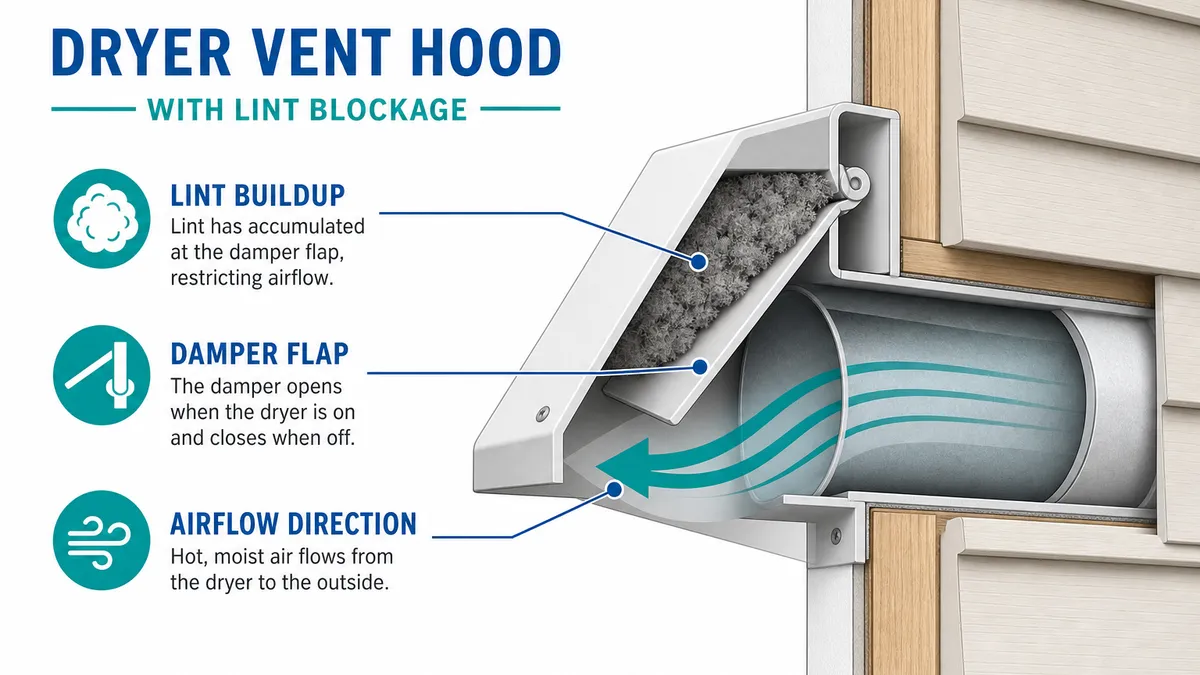
- The exterior vent hood, especially around the damper flap
In SW Florida, the humidity adds a complication. Lint in a dry-climate vent stays loose and can be partially cleared by airflow. Lint in a Florida vent picks up moisture, clumps together, and adheres to the duct walls. That is why a vent that ran fine for two years suddenly chokes off in year three.
A vertical roof-vented dryer is especially prone to buildup. Lint has to travel up against gravity. Once airflow slows, gravity wins and the lint settles into the lowest bend.
Schedule professional dryer vent cleaning in Naples, FL.
ClearAir Solutions - Family-Owned & Locally Operated
(855) 593-59237 Signs Your Dryer Vent Needs Cleaning Now
These are the signs we look for first when a Naples, Fort Myers, or Cape Coral homeowner calls about dryer performance. Any one of them is reason to investigate. Three or more is reason to schedule cleaning this week.
1. Clothes take longer than one cycle to dry. A normally working dryer dries a regular load in 35 to 50 minutes. When clothes are still damp at the end of a cycle, airflow is restricted. The most common cause is lint buildup. The second most common cause is a kinked or crushed transition hose.
2. The dryer body feels hot to the touch. Run a normal cycle for 15 minutes, then place a hand on the top and back of the dryer. A normal dryer feels warm. A blocked-vent dryer feels uncomfortably hot. If the dryer body is too hot to keep your hand on for more than a few seconds, stop using it.
3. There is a burning smell during operation. A faint, hot-laundry smell is normal. A clear burning smell, especially with a hint of plastic or hot metal, is not. Stop the dryer, unplug it, and call a professional. Do not run another load.
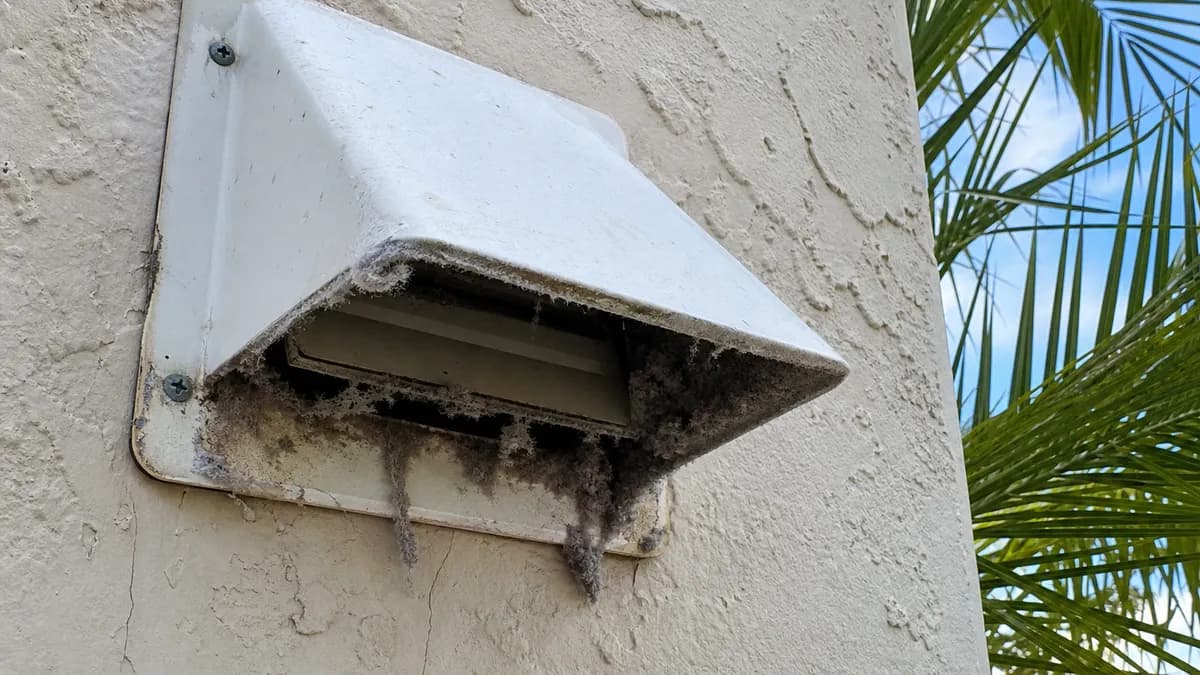
4. Lint is visible at the outdoor vent hood. Walk to the exterior of your home and find the vent hood. With the dryer running, the damper flap should be open and the air should push out cleanly. If lint is hanging out of the hood, caked around the damper, or the flap is not opening, the run is partially blocked.
5. The laundry room feels unusually warm. A dryer running normally vents most of its heat outside. A dryer with a blocked vent dumps heat into the laundry room because the air has nowhere to go. If the room is meaningfully warmer than the rest of the house during a cycle, suspect the vent.
6. The dryer auto-stops on overheat. Modern dryers have a thermal safety switch that cuts power when internal temperature exceeds a safe threshold. If the dryer stops mid-cycle and the start button does not work for 20 to 30 minutes, the overheat circuit has tripped. This is a strong signal of restricted airflow.
7. It has been more than 12 months since the last cleaning. Time alone is a sign. NFPA clothes dryer safety guidance recommends at least annual cleaning. Some homes need it more often. If you have not cleaned in over a year, schedule a service even if no other signs are present.
How Often to Schedule Dryer Vent Cleaning in SW Florida
The baseline guidance from NFPA, USFA, and most dryer manufacturers is at least once a year. SW Florida conditions push the interval shorter for several common scenarios.
Cadence by household:
- Single person, occasional laundry: every 12 to 18 months
- Couple, normal laundry load: every 12 months
- Family of 3 to 4: every 9 to 12 months
- Family of 5+ or large pet household: every 6 to 9 months
- Vertical roof-vented configuration: shorter end of any of the above ranges
- Long horizontal runs (over 25 feet): shorter end of any of the above ranges
Naples, Fort Myers, Cape Coral, Bonita Springs, and Estero homes built within the last 20 years often have long vent runs because of how laundry rooms are placed in newer floor plans. Long runs collect lint in proportion to length and number of bends. If you are setting a maintenance schedule for the whole house, our guide on how often to clean your air ducts walks through the same cadence logic for your supply and return system.
A useful sanity check: time how long a single, normal-size load takes to dry. When that time creeps up by 10 to 15 minutes compared to a year ago, you have lost airflow. Schedule cleaning before the time creeps further.
What Happens During a Professional Dryer Vent Cleaning
A professional cleaning is a 45 to 90 minute visit for most single-family homes. The technician's job is to remove all lint from end to end, verify airflow with an instrument, and identify any code or safety issues with the existing duct.
The standard process:
1. Pull the dryer out and inspect the transition hose. The flexible hose between the dryer and the wall is the most common place for crushed runs and the most common place for fire risk. Vinyl or foil hoses are not code-compliant in most jurisdictions and we replace them with rigid aluminum during the same visit.
2. Inspect and protect the work area. Drop cloth, plastic sheet around the connection point, and a HEPA-filtered vacuum staged at the dryer end of the duct.
3. Run a rotary brush from the inside out. A flexible rod with a rotary brush head feeds through the duct from the dryer connection. The brush spins as it advances, knocking lint off the duct walls. Powerful negative pressure at the dryer end captures everything as the brush works through the run.
4. Clean the exterior vent hood. The technician walks outside, opens the vent hood (or accesses the roof cap), removes any caked lint, and inspects the damper for free movement. Damaged hoods are flagged for replacement.
5. Test airflow with an anemometer. An anemometer reading at the exterior hood with the dryer running confirms the cleaning was effective. Healthy airflow runs in the 1,200 to 1,500 feet-per-minute range for most residential dryers.
6. Reconnect with rigid metal hose. The transition hose is reconnected, the dryer is pushed back, and a final test load is run for two minutes to confirm everything works.
7. Document the work. Photos of the lint removed, before-and-after of any code issues found, and notes on recommended cadence.
| Method | DIY brush kit | Professional cleaning |
|---|---|---|
| Time required | 1 to 2 hours | 45 to 90 minutes |
| Equipment cost | $30 to $60 kit | Included in service |
| Reaches roof terminations | Rarely | Yes |
| Includes airflow test | No | Yes |
| Includes hose code upgrade | No | Yes |
| Captures lint cleanly | Often messy | HEPA-filtered |
| Documentation for insurance | No | Yes |
DIY vs. Professional Dryer Vent Cleaning: Which Makes Sense?
DIY cleaning works in some situations and falls short in others. The deciding factor is how the dryer vents.
DIY is reasonable when:
- Vent run is short (under 10 feet) and straight
- Vent terminates on an exterior wall at ground level
- You can disconnect the transition hose without moving heavy appliances
- You own a brush kit and a shop vacuum
- No warning signs are currently present
Professional service is the right call when:
- Vent run is over 15 feet
- Vent goes vertically up to a roof cap
- Vent has two or more elbows
- The home is multi-family, condo, or attached townhouse
- Any of the seven warning signs above are present
- The dryer is more than 5 years old and has never been professionally cleaned
- You cannot move the dryer without help
In Naples specifically, a high share of homes have second-floor laundry rooms with vertical roof-cap vents. We recommend professional cleaning for that configuration even when the homeowner is comfortable with DIY work, because the roof cap is the dirty end and access from the ground end alone often misses the lint that has settled at the top.
What Dryer Vent Cleaning Costs in Naples, Fort Myers, and Cape Coral
National pricing data from HomeAdvisor and Angi places typical residential dryer vent cleaning between roughly $130 and $250, with some larger homes and difficult configurations running higher. SW Florida pricing tracks the same range.
| Configuration | Typical Naples-area range | Time on site |
|---|---|---|
| Short straight run, exterior wall | $130 to $170 | 45 minutes |
| Standard horizontal, single story | $145 to $195 | 45 to 60 minutes |
| Vertical roof-vented run | $185 to $260 | 60 to 90 minutes |
| Long run (over 30 feet) | $220 to $295 | 75 to 90 minutes |
| Add transition hose replacement | $25 to $45 | + 15 minutes |
| Add bird/pest screen on vent hood | $35 to $65 | + 15 minutes |
Avoid services that quote a flat $59 or $79 dryer vent cleaning. The work cannot be done correctly in the time those prices imply. The catch is usually a series of upsells once the technician arrives, or the quoted price excludes anything beyond a quick brush-and-go on the transition hose.
We give every Naples and Fort Myers homeowner a written estimate before any work starts. If we find the run requires more time than expected, we tell the homeowner first and let them decide.
Frequently Asked Questions About Dryer Vent Cleaning in Naples, FL
How often should you clean dryer vents in Naples, FL?
At least once a year as a baseline, per NFPA and U.S. Fire Administration guidance. Move it to every 6 to 9 months for big families, pet households, vertical roof-vented runs, or any vent over 25 feet long. The simplest test is drying time: when a normal load starts taking more than 50 minutes, schedule cleaning. Naples, Fort Myers, and Cape Coral homes with humidity-driven lint clumping often need shorter intervals than the national average.
How much does dryer vent cleaning cost in Naples, FL?
A typical single-family home runs $130 to $250 depending on length and configuration. Roof-vented homes are at the higher end. Long runs and any code-required hose replacement add modest costs. Cape Coral and Fort Myers pricing is similar. Be skeptical of advertised prices under $100 for a full cleaning; the work is harder than that price implies.
How long does dryer vent cleaning take?
Most jobs run 45 to 90 minutes from arrival to handoff. Long roof-vented runs can take up to two hours, especially if there is heavy buildup or if the vent hood needs replacement. Plan to be home for the visit so the technician can pull the dryer out, run an airflow test, and walk you through any findings.
Can a clogged dryer vent really start a fire?
Yes. The U.S. Fire Administration identifies failure to clean as the leading cause of residential clothes dryer fires every year. Lint is highly flammable. A blocked vent traps hot air around the heating element and motor, raises internal temperatures past safety thresholds, and in worst cases ignites lint inside the duct itself. Once a lint fire starts inside a vent, it can spread quickly to wall framing.
Should I clean my dryer vent or replace the hose?
Both, often in the same visit. Clean the duct from end to end, then replace any vinyl or foil transition hose with rigid aluminum or semi-rigid metal. Vinyl hoses are not code-compliant in most jurisdictions because they sag, kink, and themselves can ignite. The hose is inexpensive (under $30 for the part) and the install is fast.
Do gas dryers and electric dryers need the same vent cleaning?
Yes. Both produce roughly the same volume of lint per load, both depend on clear airflow, and both pose fire risk when the vent is blocked. Gas dryers also produce combustion byproducts that need to be vented properly, which adds a carbon monoxide consideration on top of the fire risk. Cleaning cadence is the same for both types.
Schedule Dryer Vent Cleaning in Naples or Fort Myers Today
Dryer vent cleaning is one of the highest-impact, lowest-cost safety services for any SW Florida home. Most jobs are done in under 90 minutes, and they prevent the single most common cause of clothes dryer fires in the country.
ClearAir Solutions provides dryer vent cleaning across Naples, Fort Myers, Cape Coral, Bonita Springs, Estero, Marco Island, Sanibel, and Lehigh Acres. We use rotary brush + HEPA-filtered vacuum systems, replace non-code transition hoses with rigid metal, test airflow with an anemometer at the exterior vent, and document everything for your records.
Call (855) 593-5923 to schedule a dryer vent cleaning. Family-owned and locally operated, serving SW Florida. Same-day appointments are often available.
Need help in Naples, Fort Myers, or anywhere in Southwest Florida? Call ClearAir Solutions at (239) 306-2327.