Air Duct Cleaning in Naples, FL: 7 Warning Signs Now
If you live in a Naples home with persistent dust, a musty whiff every time the AC kicks on, or allergy symptoms that flare up indoors, the answer is usually upstream of the vents themselves. Air duct cleaning in Naples, FL is rarely about clean air for its own sake. It is about removing the substrate (dust, biofilm, microbial growth, construction debris) that the SW Florida climate concentrates inside hidden ductwork. The seven signs in this guide are the field markers our experienced air duct specialists use to decide when a home actually benefits from a full cleaning, and when other work (a coil clean, a filter change, a humidity adjustment) will solve it for less.
Below is a quick-scan summary of the seven signs covered in this guide. If you recognize three or more, schedule a duct inspection.
| # | Sign | What it usually points to |
|---|---|---|
| 1 | Visible dust around vents | Loaded supply ducts |
| 2 | Indoor allergy or asthma flare-ups | Dust, dander, or microbial particles in circulation |
| 3 | Musty smell when the AC runs | Moisture plus organic film in the system |
| 4 | Dust returns days after cleaning | Recirculation from dirty ducts |
| 5 | Recent move-in or renovation | Construction debris in the duct system |
| 6 | Unexplained energy bill increase | Restricted airflow forcing longer cycles |
| 7 | Visible mold or moisture in or near ducts | Active microbial growth, top priority |
Why Air Duct Cleaning Matters in Naples, FL
SW Florida is one of the worst climates in the country for what builds up inside an HVAC system. Naples averages roughly 75 to 78% relative humidity year-round, the cooling season runs nine to ten months, and outdoor air pulled into the system carries pollen, fine dust, and mold spores into the equipment every cycle. That moisture-rich, organic-rich environment is exactly what microbial growth needs to colonize a coil, a drain pan, or the inside of a sheet-metal trunk.
The industry duct-cleaning standard makes one point our technicians repeat on every Naples job: real air duct cleaning is a whole-system task. A proper cleaning includes the return ducts, supply ducts, the plenum, the evaporator coil, and the blower wheel. Skipping the coil or the blower defeats the point because contaminated air still recirculates after the visible registers look clean.
In our experience servicing Naples, Fort Myers, Cape Coral, and Bonita Springs homes, the homes that benefit most from a duct cleaning fall into one of two camps: homes with a specific event (renovation, water intrusion, post-storm exposure) or homes with one of the seven warning signs below.
1. You See Visible Dust Pushing Out of the Vents
Walk to a supply register in the living room or primary bedroom and look at the slats. Are they coated with a fine gray dust? Now look at the ceiling, drywall, or paint immediately around that register. A dark, almost airbrushed shadow ringing the vent is a strong sign that the duct on the other side is loaded with dust the system is pushing into the room.
A simple test: wipe the slats clean with a damp cloth, then check again 48 hours later. A heavy return is a flag. Light dust is normal.
This sign is usually the easiest to confirm and the most common reason Naples homeowners call us. It often shows up first in the bedrooms (longest single duct runs) and least in rooms closest to the air handler.
Schedule professional air duct cleaning in Naples, FL today.
ClearAir Solutions - Family-Owned & Locally Operated
+1 (855) 593-59232. Allergy or Asthma Symptoms Get Worse Indoors
The U.S. Environmental Protection Agency notes that indoor air can in many cases be more polluted than outdoor air, especially in tightly sealed homes that recirculate the same air repeatedly. In a Florida home running the AC nine months out of the year, every airborne particle has many chances to pass through the duct system.
Common SW Florida triggers that find their way into ductwork:
- Pollen from oaks, pines, and palms (heaviest February through May)
- Mold spores raised from yard work and outdoor surfaces during humid months
- Pet dander accumulating on duct interior surfaces
- Fine drywall and demo dust from nearby construction
If a family member's allergies, asthma, or unexplained nighttime cough get worse indoors and improve outdoors or away from home, the duct system is one of the variables to rule out. We typically recommend ruling out filtration first (a high-MERV filter properly sized for the system) before scheduling a duct cleaning.
3. There's a Musty or Stale Smell When the AC Runs
A musty or stale smell that arrives within seconds of the AC firing up is one of the clearest signals that microbial growth is somewhere in the system. The most common locations are the evaporator coil, the drain pan, and the inside of the supply plenum where condensate and dust meet.
In our experience servicing Naples homes through the rainy season, the smell is usually strongest:
- First thing in the morning when the AC has been off overnight
- Right after a long power outage in summer
- After returning from a vacation with the thermostat set high
The smell is the symptom. The cause is moisture sitting on organic film. The U.S. Environmental Protection Agency's guidance on duct cleaning flags moisture-driven biological growth as one of the conditions that actually justifies a cleaning. Duct work alone rarely solves a musty smell without a coil and condensate clean as part of the same visit.
4. Dust Returns Within Days of Cleaning the House
If you dust on Saturday and the same surfaces show a fine layer by Monday, the duct system is the most likely culprit. Houses do not generate that volume of dust on their own. The HVAC system is a recirculation loop, and every time a dirty duct cycles air across furniture, surfaces re-load.
A quick way to confirm:
- Wipe one shelf clean and date a sticky note.
- Close the room's vent and door.
- Wipe a second shelf in a normal-airflow room and date that sticky note.
- Compare the two surfaces three days later.
If the closed-vent room is meaningfully cleaner, you are seeing duct contribution. This pattern is especially common in older Naples and Fort Myers homes where flexible duct runs through the attic have not been touched in 10 to 15 years.
5. You Just Moved Into the Home (or Renovated)
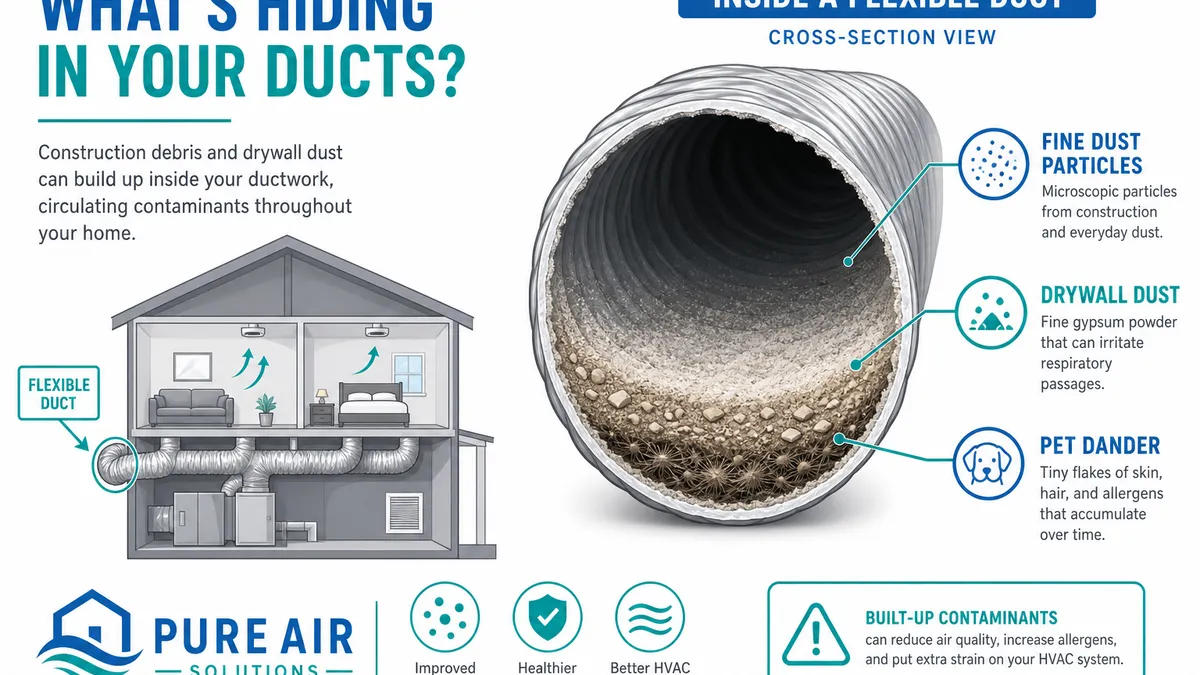
Recent move-ins and post-renovation projects are two of the top scheduled reasons we clean ducts in SW Florida. Both involve contaminants the new occupant did not create and is now circulating through their lungs.
What ends up in ducts after construction:
- Drywall dust (extremely fine, settles slowly, irritates airways)
- Sawdust from cabinetry and trim work
- Insulation fibers from attic work
- Pet dander from prior owners
- Old microbial growth from years of neglected maintenance
Cape Coral, Bonita Springs, and Estero have seen heavy remodeling activity in recent years, and the ducts in those homes are often the only system component a buyer or renovator does not actively clean. A single post-renovation cleaning, ideally before the new HVAC system is fully commissioned, prevents debris from being pulled across a brand-new coil.
6. Energy Bills Have Crept Up With No Other Explanation
The U.S. Department of Energy notes that any restriction in airflow, including dirty ducts, dirty coils, blocked filters, or duct leakage, forces the system to run longer to reach the same setpoint. Longer runtime means higher kilowatt-hour use and higher bills.
We hedge on specific savings percentages because the published numbers vary widely and depend on the starting condition of the system. What we can say with confidence: in a Naples home where the bills jumped 15-25% over the same months last year and no other variables changed (same thermostat setpoint, same family, same equipment), the airflow chain is the first place to look.
The diagnostic order we recommend, cheapest first:
- Check the air filter. Replace if loaded.
- Inspect the coil and blower wheel for visible buildup.
- Inspect the duct interior with a camera.
- Check for duct leakage in the attic.
Air duct cleaning fits into step 3, and is most useful when steps 1 and 2 alone do not restore performance.
7. There's Visible Mold or Moisture in or Around the Ducts
This is the highest-priority sign on the list. The EPA's guidance on duct cleaning is conditional rather than universal, but it specifically calls out visible mold growth on hard duct surfaces, on fiberglass duct insulation, or in components like coils and drain pans as a clear reason to address the system. SW Florida humidity makes this scenario more common here than in most U.S. markets.
Where to look:
- The supply registers themselves, especially the back side of the slats
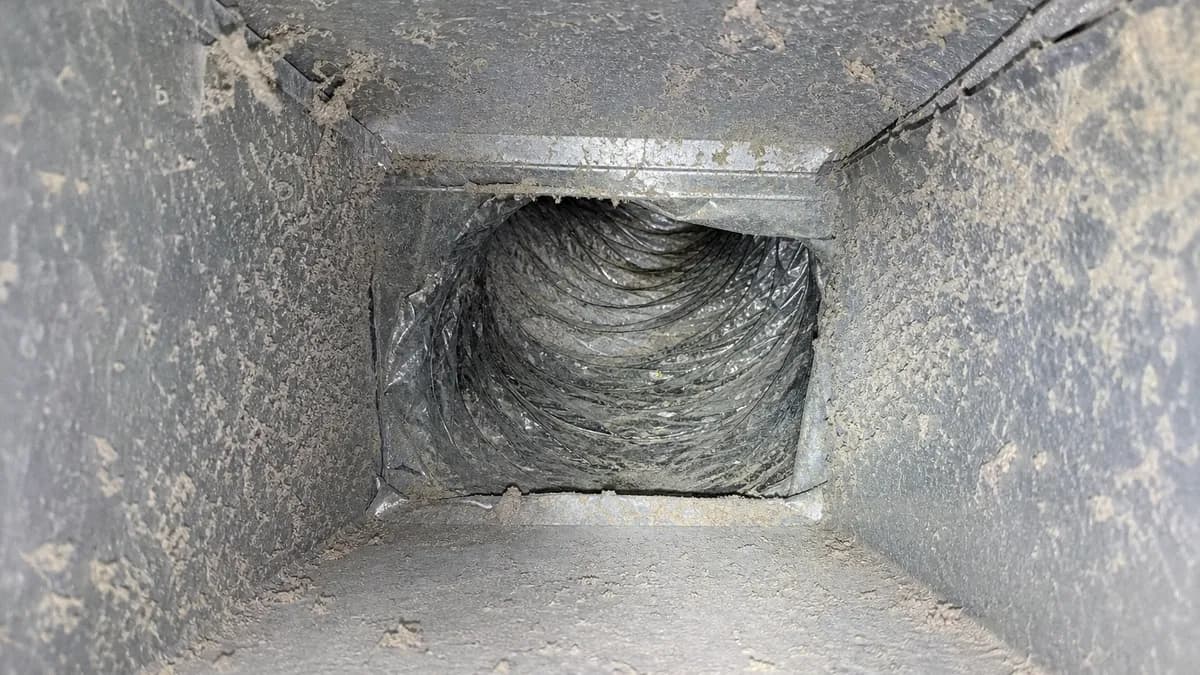
- The fiberglass insulation lining inside flexible ducts (visible by removing a register and using a flashlight)
- The drain pan under the air handler
- The plenum where the air handler connects to the supply trunk
If you see visible black, green, or white patches, do not ignore them and do not try to clean them yourself with bleach inside the duct. Contact an experienced duct cleaning company. EPA-registered antimicrobial sanitization, applied correctly, is part of a full cleaning, and a thorough company will flag a confirmed mold problem and point you to a licensed mold specialist. Spraying bleach into a duct is not a fix and can damage components.
What a Real Source-Removal Duct Cleaning Includes
Naples has its share of $99 duct cleaning ads, and the same lowball pricing pattern shows up in dryer vent cleaning. In almost every case those ads cover a "blow and go" service that does not meet the industry duct-cleaning standard. A real cleaning takes three to five hours for a typical 1,500 to 2,500 sq ft single-system home, requires negative-pressure containment, and addresses every component of the air path.
| Step | Proper source-removal cleaning | Typical low-cost duct cleaning |
|---|---|---|
| Negative-pressure containment | HEPA-filtered vacuum on the trunk creates negative pressure during cleaning | Skipped or replaced with a shop vac |
| Source removal | Mechanical agitation tools (whips, brushes, air skippers) move debris into the vacuum | Brush or no agitation |
| Coil cleaning | Foaming or rinse-based coil cleaner, full inspection | Skipped |
| Blower wheel cleaning | Removed and cleaned, or cleaned in place | Skipped |
| Drain pan and condensate line | Cleaned and flushed | Skipped |
| Antimicrobial sanitization | EPA-registered product, applied per label after cleaning | Skipped or fragrance only |
| Time on site | 3 to 5 hours for a typical home | 30 to 60 minutes |
| Documentation | Before and after photos | Rare |
Source removal is the technical phrase that matters. A real cleaning physically removes contaminants from the system. A surface cleaning leaves them in place and pushes some out the registers. Ask any company you call about their source-removal process, whether they follow the industry duct-cleaning standard, and whether their price includes coil and blower wheel cleaning. The honest answer to those three questions is the fastest way to separate a real provider from a low-cost lead generator.
Cost and Timing Expectations for SW Florida Homes
Cost varies with home size, system count, layout, and condition of the ductwork. National range data from HomeAdvisor and Angi places typical full-system cleanings between $300 and $700, with whole-home cleanings of larger or more contaminated systems running higher. Naples, Fort Myers, Cape Coral, and Bonita Springs pricing typically tracks the same band, with multi-system homes at the higher end.
| Home size and system count | Typical Naples-area range | Approximate time on site |
|---|---|---|
| 1,500 sq ft, single system | $375 to $525 | 3 to 4 hours |
| 2,500 sq ft, single system | $475 to $675 | 4 to 5 hours |
| 3,500+ sq ft, two systems | $750 to $1,200 | 6 to 8 hours |
| Add EPA-registered antimicrobial fog | $75 to $150 per system | + 30 minutes |
We give every Naples and Fort Myers homeowner a written, line-item estimate before any work starts. If a company quotes a flat price under $200 for a full home, ask which components are excluded. The answer is almost always the coil, the blower, and the antimicrobial step, which means the smell or symptom that brought the customer in is unlikely to be solved.
Frequently Asked Questions About Air Duct Cleaning in Naples, FL
How often should I have air duct cleaning in Naples, FL?
Industry guidance suggests every 3 to 5 years for most homes. In SW Florida that interval often runs shorter because of humidity, year-round cooling, and pollen load. Move it earlier if anyone in the home has allergies or asthma, if you have multiple pets, after any renovation, or after a major storm with attic intrusion. Many Naples homes do well on a 3-year cycle with annual coil and condensate maintenance in between.
Does air duct cleaning really improve indoor air quality?
The honest answer is conditional. When ducts contain visible dust, microbial growth, or post-renovation debris, cleaning meaningfully improves indoor air quality and odor. When a duct system is already clean, the benefit is small and most of the indoor air quality improvement will come from filtration, humidity control, and source reduction. EPA guidance reflects this: clean ducts when there is a reason, not on a calendar reflex.
How long does an air duct cleaning take in a typical Naples home?
A 1,500 to 2,500 sq ft single-system home runs 3 to 5 hours when done to industry source-removal standards. Multi-system homes, larger square footage, and homes with very contaminated returns can run 6 to 8 hours. Anything advertised as a 30-minute or 60-minute full-home cleaning is not a full cleaning.
Can dirty ducts cause mold in a Florida home?
Florida humidity plus dust in the duct system creates a substrate for microbial growth, especially when the condensate drain backs up or when the coil is dirty. Mold needs moisture and an organic food source. Ducts in SW Florida have both more often than ducts in drier climates. Dirty ducts do not always cause visible mold, but they are a contributing factor in many of the mold cases we see.
What does a proper, source-removal duct cleaning actually involve?
Source-removal duct cleaning is a four-part process: containment, agitation, capture, and sanitization. The technician seals the system, uses mechanical tools (whips, brushes, and air skippers) to physically loosen contaminants from the duct walls, captures the debris through a HEPA-filtered negative-pressure vacuum, and finishes with an EPA-registered antimicrobial applied per the label. The full process also covers the coil, blower wheel, drain pan, and plenum, not just the visible registers. That baseline is what separates a real cleaning from a quick brush-and-go.
Do I need duct cleaning after a new AC install?
Often yes, especially when the install involved drywall cuts, attic work, or any demo. Drywall dust, fiberglass shed during sleeve work, and old debris from the prior system get pulled across a brand-new coil otherwise. We recommend a duct cleaning either immediately before the new install (to start fresh) or within 30 days after, paired with a final filter change.
Schedule Your Air Duct Cleaning in Naples or Fort Myers
If two or three of the seven signs above describe your home, the next step is a duct inspection, not a guess. ClearAir Solutions sends experienced technicians to Naples, Fort Myers, Cape Coral, Bonita Springs, Estero, Marco Island, and the surrounding SW Florida communities. We give you a written scope of work, photograph the before-and-after condition of every component, and only recommend a full cleaning when the system actually warrants it.
Call (855) 593-5923 to schedule an inspection. Family-owned and locally operated, serving SW Florida. Same-day appointments are often available during the cooling season, and we are happy to walk you through what we find before any work starts.
Need help in Naples, Fort Myers, or anywhere in Southwest Florida? Call ClearAir Solutions at (239) 306-2327.