
Dryer Vent Fire Safety: Stop Clogs Before They Burn
Dryer Vent Fire Safety: How Clogged Vents Cause Fires and How to Prevent Them
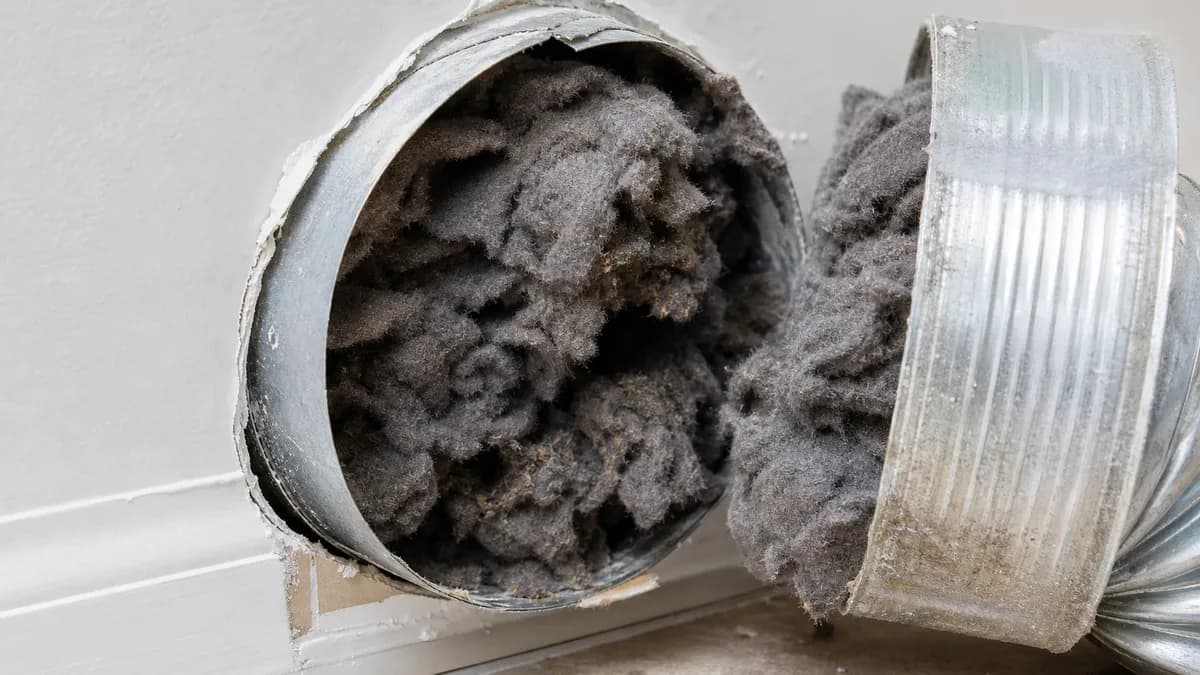
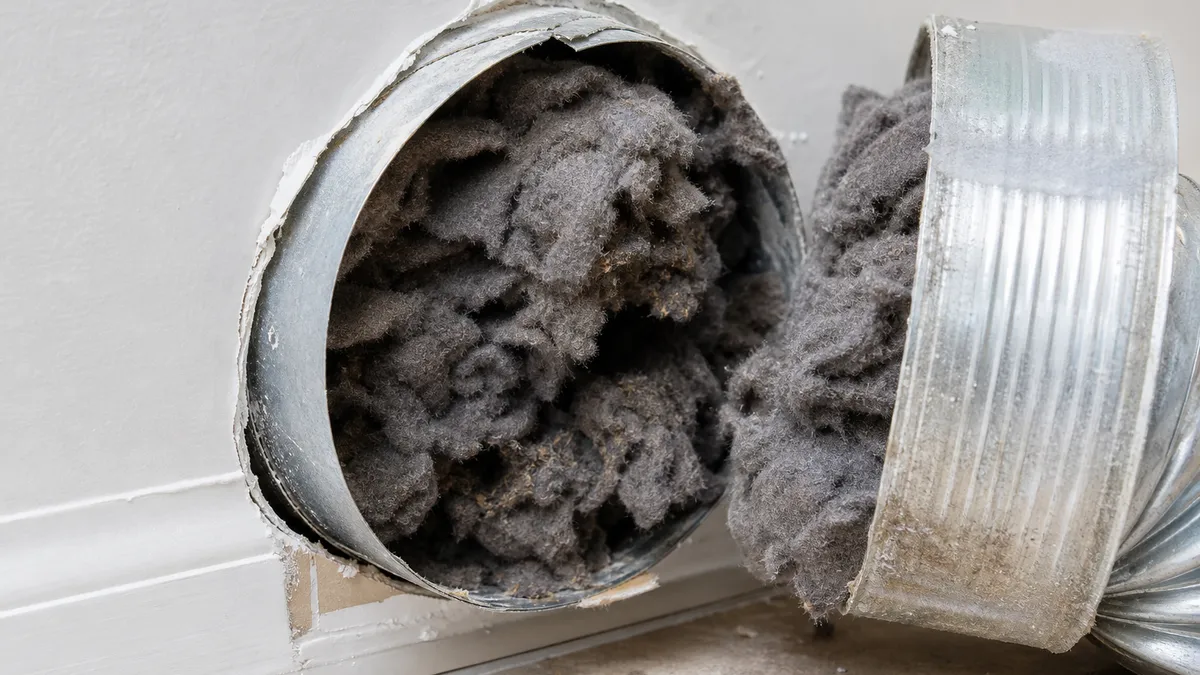
Dryer vent fire safety comes down to one habit: keeping the full vent line clear of lint. The U.S. Fire Administration, part of FEMA, consistently lists failure to clean as the leading contributing factor in residential clothes dryer fires, and the fuel in nearly every one of those fires is ordinary lint.
Cleaning the lint screen after each load helps, but it does not touch the vent run behind the wall where most dangerous buildup hides. This guide explains exactly how a clogged vent turns into a fire, the warning signs you can check yourself today, and the prevention steps that actually lower the risk in a humid Southwest Florida home.
If you remember only three things: clean the lint screen every single load, have the full vent line cleaned at least once a year, and replace any foil or vinyl flex hose with rigid metal. Those three moves handle the large majority of dryer vent fire risk.
| Fire safety habit | How often | Who does it |
|---|---|---|
| Clean the lint screen | Every load | Homeowner |
| Clear the exterior vent hood | Monthly check | Homeowner |
| Clean the full vent line | At least once a year | Professional |
| Replace foil or vinyl flex hose | Once, then inspect yearly | Professional |
| Confirm exterior flap opens freely | Monthly check | Homeowner |
Why Dryer Vent Fire Safety Matters in SW Florida Homes
Dryer vent fire safety is not an abstract worry. Clothes dryers are tied to thousands of residential fires across the United States each year, and federal fire data points to failure to clean as the single biggest contributing factor. Lint is highly flammable, and once it accumulates inside a vent run it sits right next to a heat source every time you run a load.
Florida adds its own pressure to the problem. We serve homes across Naples, Fort Myers, Cape Coral, and Bonita Springs, and the same patterns show up again and again. High humidity makes fine lint clump and cling to duct walls instead of blowing clear, so blockages form faster than they would in a dry climate.
Many SW Florida homes also route the dryer vent vertically through the attic to a roof cap, which is the hardest configuration to keep clear and the easiest to neglect.
There is a comfort cost too, not just a safety one. A partially blocked vent makes the dryer work longer and run hotter, which drives up your electric bill and shortens the life of the appliance. Dryer vent fire safety and efficiency are the same project: a clear vent is both safer and cheaper to run.
A few reasons SW Florida homes deserve extra attention:
- Humid air slows lint drying and helps it stick inside the duct
- Long vertical runs to roof caps trap more buildup than short side-wall vents
- Pet hair from indoor pets adds a second source of fine fiber
- Storm debris can partially block the exterior vent hood and choke airflow
In our experience servicing Naples and Fort Myers laundry rooms, the vents with the heaviest lint loads are almost always the ones that have gone several years without a cleaning. The longer the gap, the higher the risk climbs.
How a Clogged Dryer Vent Causes a Fire
To understand dryer vent fire safety, it helps to follow the path of a single load. Your dryer pulls in air, heats it, tumbles it through wet clothes, and then pushes that warm, moisture-laden air out through the vent line to the outdoors. Along the way, the air carries fine lint that slips past the lint screen. In a clear vent, that lint blows straight out the exterior hood. In a clogged vent, it has nowhere to go.
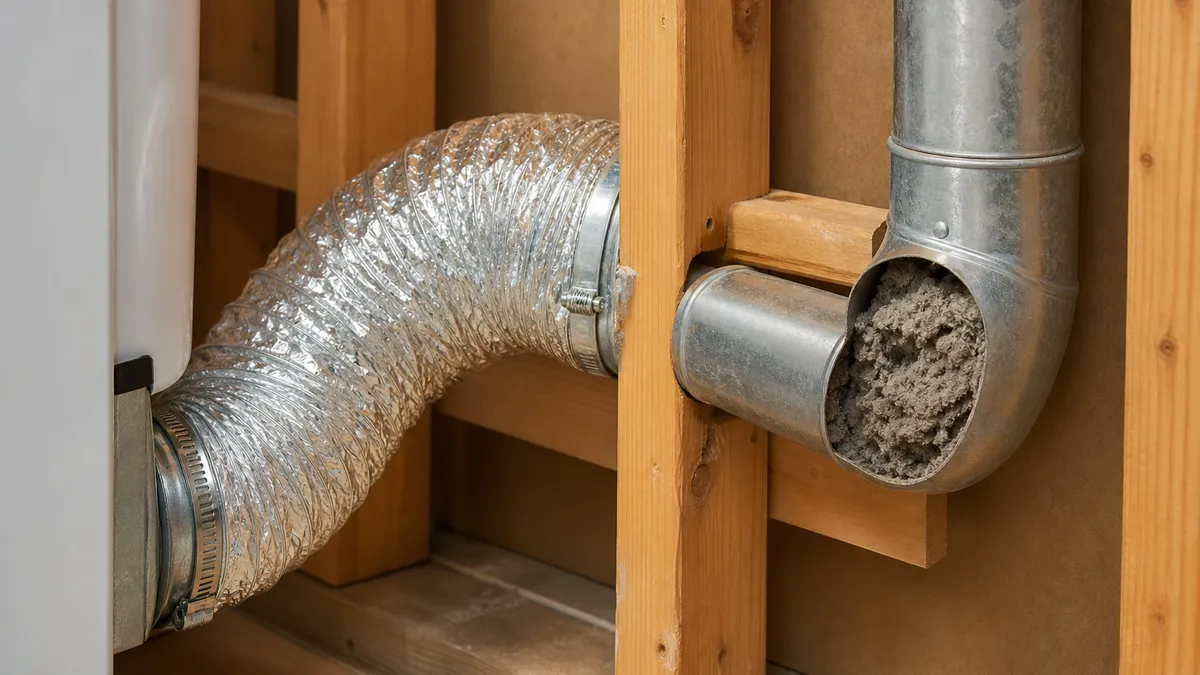
Here is the chain of events that turns lint buildup fire risk into an actual fire:
- Lint accumulates along the vent walls, bends, and the exterior hood
- Airflow drops, so moist hot air cannot escape efficiently
- The dryer senses clothes are still damp and runs longer cycles
- Internal temperatures climb because heat is trapped instead of vented
- The heating element and motor work harder and run hotter than designed
- Highly flammable lint sits next to that rising heat, and in worst cases it ignites
The vent line is not the only place lint hides. It collects in the transition hose between the dryer and the wall, in every elbow and bend of the rigid duct, and at the exterior hood where the flap can stick. The dryer fire causes that fire departments cite most often trace back to these exact spots. A flexible foil or vinyl hose makes it worse, because the ridged interior catches lint and the plastic itself is combustible.
This is also why cleaning the lint screen alone is not enough. The screen catches most of the lint per cycle, but the fine fiber that passes through is what builds up deep in the line. Real dryer vent fire safety means clearing the entire run from the dryer to the exterior hood, not just the screen you can see.
Worried about lint buildup? Schedule a dryer vent cleaning in Naples or Fort Myers today.
ClearAir Solutions - Family-Owned and Locally Operated
(855) 593-5923Warning Signs of a Clogged Dryer Vent
Most dryer vent fires give plenty of warning first. The signs of a clogged dryer vent build gradually, and a homeowner who knows what to watch for can catch the problem long before it becomes dangerous. Pay attention to how your dryer behaves load to load, because changes in performance are usually the first clue.
Watch for these warning signs:
- Clothes take more than one cycle to dry. This is the most common and most reliable early sign. A normal load that suddenly needs a second run almost always points to restricted airflow.
- The dryer body and clothes are hot to the touch. Excess surface heat means the unit is trapping heat instead of venting it.
- A burning or musty smell during a cycle. A burning smell means stop using the dryer immediately. Lint may already be scorching.
- Little or no air at the exterior vent hood. When the dryer runs, you should feel strong warm airflow outside. Weak or no flow means a blockage.
- Visible lint around the exterior hood or behind the dryer. Lint escaping at the ends signals heavy buildup inside.
- A warm, humid laundry room. If the room feels like a sauna during a cycle, moist air is leaking out instead of venting properly.
Any one of these is worth investigating. Two or more together means the vent likely needs cleaning soon. If you notice a burning smell or the dryer shutting itself off mid-cycle on an overheat sensor, treat it as urgent and stop using the appliance until the vent is cleared. These same neglect patterns often overlap with the broader signs you need duct cleaning in the rest of the home.
Quick Self-Check You Can Do Today
You do not need tools to gauge dryer vent fire safety in a few minutes. Start the dryer on a normal heat cycle, then walk outside to the exterior vent hood. Hold your hand a few inches from the opening. You should feel steady, strong warm air pushing out, and the flap should be open. If the airflow is weak, the flap barely moves, or you see lint clinging around the opening, the line needs attention.
Back inside, pull the lint screen and clean it, then look at the slot it sits in. If you see lint packed below the screen or feel resistance, fine fiber is collecting where you cannot easily reach. That is your cue to schedule a full vent line cleaning rather than assuming the screen handled it.
How to Prevent Dryer Fires Through Vent Cleaning
Dryer vent fire prevention is mostly a matter of routine. None of these steps are complicated, and together they handle the large majority of risk. The goal is to keep lint from accumulating and to make sure heat and moisture have a clear, fast path out of the house.
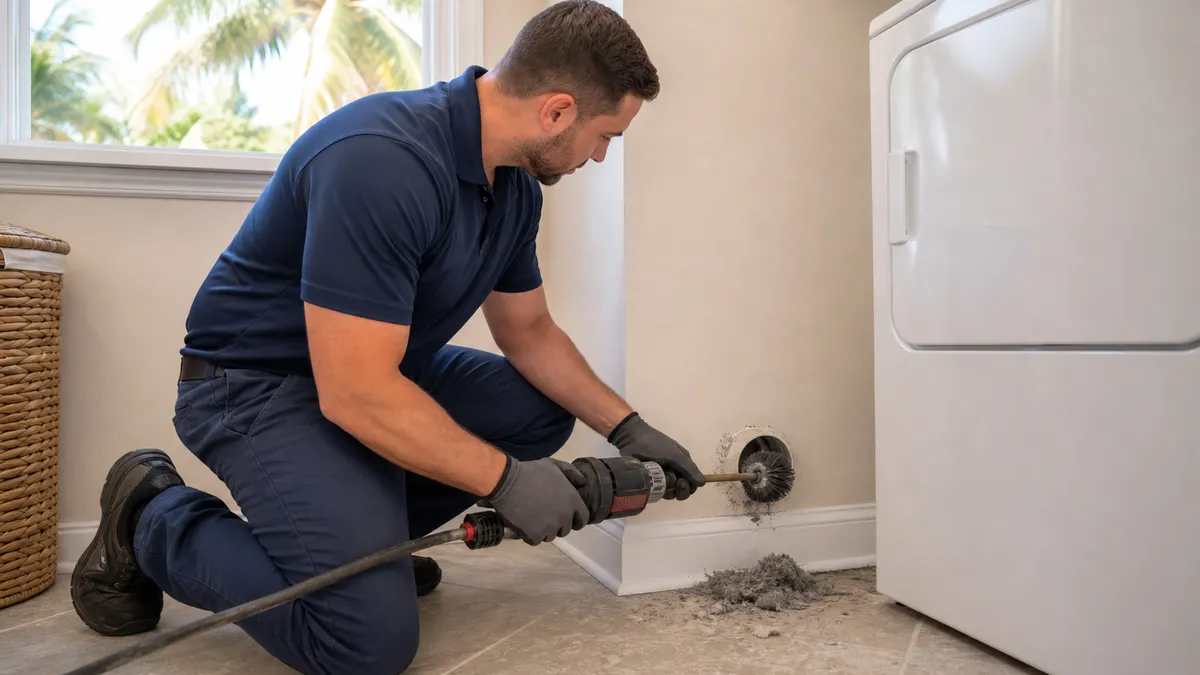
Use this prevention checklist to learn how to prevent dryer fires at home:
- Clean the lint screen before or after every load. This is the single most important daily habit. A clogged screen chokes airflow from the very first foot of the system.
- Schedule professional vent cleaning at least once a year. A pro clears the full run from the dryer to the exterior hood, including the bends where lint hides.
- Replace foil or vinyl flex hose with rigid or semi-rigid metal. Metal ducting resists lint buildup and will not burn the way plastic does. This single swap is one of the highest-impact moves for dryer vent fire safety.
- Keep the vent run as short and straight as practical. Every extra bend and foot of length is another place for lint to collect.
- Check the exterior flap monthly. Make sure it opens fully when the dryer runs and closes when it stops, so it keeps pests and debris out without restricting airflow.
- Do not overload the dryer. Packed loads hold more moisture, force longer cycles, and push more lint into the line.
The distinction between the lint screen and the full vent line is the part homeowners miss most often. The screen is your daily defense, but it only captures the lint it can reach. The fine fiber that slips past builds up deep in the duct over months, and only a full cleaning removes it. Treat the two as separate jobs: one you do every load, one a professional does each year.
For homes with gas dryers or roof-vented runs, professional cleaning matters even more. A blocked gas dryer vent traps both heat and combustion byproducts, and a roof termination is dangerous and difficult to reach safely. Those are not DIY jobs.
How Often Should You Clean Your Dryer Vent?
For most homes, once a year is the right baseline for dryer vent fire safety, in line with general fire-safety guidance. That said, the right interval depends on how hard you run the dryer, how long and complex the vent run is, and what else gets pulled into the line. Bigger households and pet owners should clean more often.

Use this table to find your interval:
| Household type | Suggested cleaning interval | Why |
|---|---|---|
| Small household, short side-wall vent | Once a year | Standard buildup rate |
| Large family running daily loads | Every 6 to 9 months | High volume means faster lint accumulation |
| Home with indoor pets | Every 6 to 9 months | Pet hair adds fine fiber to the line |
| Long or roof-vented run (over 25 feet) | Every 6 to 12 months | More length and bends trap more lint |
| Recently bought home, history unknown | Clean now, then yearly | Establish a clean baseline first |
The easiest real-world test is drying time. When a normal load starts taking noticeably longer than it used to, the vent is telling you it needs attention regardless of the calendar. In humid Naples and Cape Coral homes, where lint clings and dries slowly, we generally lean toward the shorter end of these ranges.
If you have just moved in, treat the vent as overdue until proven otherwise. You rarely know how long it has been since the previous owners cleaned it, and a single cleaning gives you a clean starting point to measure from.
DIY vs Professional Dryer Vent Cleaning
Some dryer vent maintenance is genuinely DIY, and some is not. Knowing the line keeps you safe and protects your appliance. Homeowners can and should handle the routine surface tasks. The deep cleaning, long runs, and roof terminations are where a professional earns the call.
Here is how the two approaches compare:
| Task | DIY-friendly | Best left to a pro |
|---|---|---|
| Cleaning the lint screen | Yes | - |
| Clearing the exterior vent hood | Yes | - |
| Vacuuming the first few feet of duct | Yes, carefully | - |
| Cleaning a long or bending vent run | - | Yes |
| Roof-vented or attic terminations | - | Yes |
| Replacing transition hose with metal | Sometimes | Yes, for permanent runs |
| Gas dryer vent service | - | Yes |
What a homeowner can safely do: clean the lint screen every load, brush and vacuum the exterior hood, check that the flap moves freely, and clear the first short stretch of accessible duct with a vacuum. These tasks cover the parts you can see and reach without disconnecting anything permanent.
Where a professional matters: anything involving a long run, multiple bends, a roof or attic termination, a gas dryer, or disconnecting and reconnecting the duct. Reaching deep buildup requires rotary brush tools and the experience to clear lint without damaging the duct or leaving gaps.
Getting on a roof to service a vent cap is a safety risk most homeowners should not take. A pro also confirms the line is fully clear and sealed afterward, which a partial DIY job often misses. If your laundry room also has a musty smell that returns from the AC vents, that is a sign worth raising during the same visit.
Keeping Your Naples Home Safe Year-Round
Dryer vent fire safety is not a one-time project. It is a small set of habits that, kept up, nearly eliminate one of the most common and preventable home fire risks. Clean the lint screen every load, watch for the warning signs of restricted airflow, replace flex hose with rigid metal, and bring in a professional to clear the full line at least once a year. In humid SW Florida, lean toward the shorter end of every cleaning interval.
We are ClearAir Solutions, a family-owned air duct and dryer vent cleaning company serving Naples, Fort Myers, Cape Coral, Bonita Springs, and the surrounding communities. We clean the entire vent run using source-removal methods, replace non-compliant hose with rigid metal, and confirm strong airflow before we leave.
If your dryer has been running long, your clothes come out hot, or it has simply been more than a year, do not wait for a warning sign to become an emergency. Call ClearAir Solutions at (855) 593-5923 to schedule a dryer vent cleaning and protect your home.
Frequently Asked Questions
Can a clogged dryer vent really start a fire?
Yes. Lint is highly flammable, and a blocked vent traps hot air around the heating element and motor instead of pushing it outside. Federal fire data from the U.S. Fire Administration points to failure to clean as the leading contributing factor in residential clothes dryer fires. Over time, restricted airflow raises internal temperatures past safe levels, and in the worst cases the lint inside the duct ignites. Regular cleaning of the full vent line is the most effective way to remove that fuel.
What are the first signs of a dryer vent fire risk?
The earliest and most reliable sign is clothes that take more than one cycle to dry. Other early warnings include a dryer body or clothes that feel hot to the touch, a burning or musty smell during operation, weak airflow at the exterior vent hood, and a laundry room that feels unusually warm and humid. A burning smell means you should stop using the dryer right away. Two or more of these signs together strongly suggest the vent needs cleaning soon.
How often should a dryer vent be cleaned for fire safety?
At least once a year for most homes, which lines up with general fire-safety guidance. Large families running daily loads, homes with indoor pets, and long or roof-vented runs should move to every six to nine months. In humid Southwest Florida, lint clings and dries slowly, so we generally recommend the shorter end of those ranges. The simplest real-world test is drying time: when normal loads start taking noticeably longer, schedule a cleaning regardless of the calendar.
Does cleaning the lint screen prevent dryer fires?
It helps, but it is not enough on its own. The lint screen captures most of the lint produced per cycle, which is why you should clean it every load. The fine fiber that slips past the screen is what builds up deep inside the vent line, where you cannot see or reach it. That hidden buildup is the main fire risk, and only a full vent line cleaning removes it. Treat the screen as your daily habit and the full cleaning as a separate annual job.
Is dryer vent cleaning worth it in humid Florida?
Yes, and arguably more so than in drier climates. Florida humidity makes lint clump and cling to the inside of the duct rather than blowing clear, so vents clog faster here. Many SW Florida homes also route the vent vertically to a roof cap, which traps more buildup. Damp air leaving the dryer adds moisture that helps lint stick. For homes in Naples, Fort Myers, and Cape Coral, regular cleaning is a meaningful part of dryer vent fire safety and keeps drying times and energy bills down too.
What type of dryer vent ducting is safest?
Rigid or semi-rigid metal ducting is the safest choice. Foil and vinyl flexible hoses have ridged interiors that catch lint, and the plastic itself can burn, which makes them a poor fit for dryer vent fire safety. Most building codes do not allow vinyl flex hose for dryer venting. Replacing any foil or vinyl transition hose with smooth rigid metal reduces lint buildup, improves airflow, and removes a combustible material from right next to the heat source. It is one of the highest-impact upgrades you can make.
Need help in Naples, Fort Myers, or anywhere in Southwest Florida? Call ClearAir Solutions at (239) 306-2327.